


Hangzhou Mingxin Hydrogen Peroxide Co.,LTD is located in the beautiful capital city of Zhejiang Province, China - Hangzhou.The company is a high-tech enterprise that specializes in the production of hydrogen peroxide products. It was established in November 2007 with total assets of RMB 200 million, and controlled by Hangzhou Electrochemical Group Co.,LTD .
Our company actively advocates the enterprise spirit of "unity, practicability and innovation" and the enterprise vision of "customer satisfaction, enterprise prosperity, employee happiness". After ten years of development, the company has become an very important supplier of hydrogen peroxide solution in China, and provides high-quality hydrogen peroxide solution products to global customers.
Providing you with a large variety of Hydrogen Peroxide concentrations (Made with high quality DI H2O)
Large local storage for efficient bulk (tank truck) and package delivery (5-55 gallon) of Hydrogen Peroxide


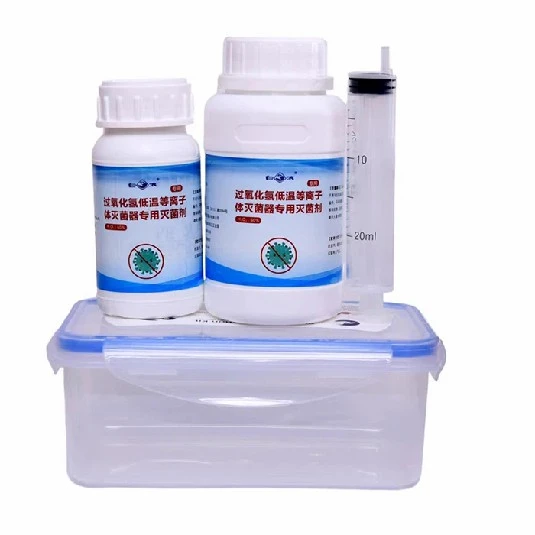
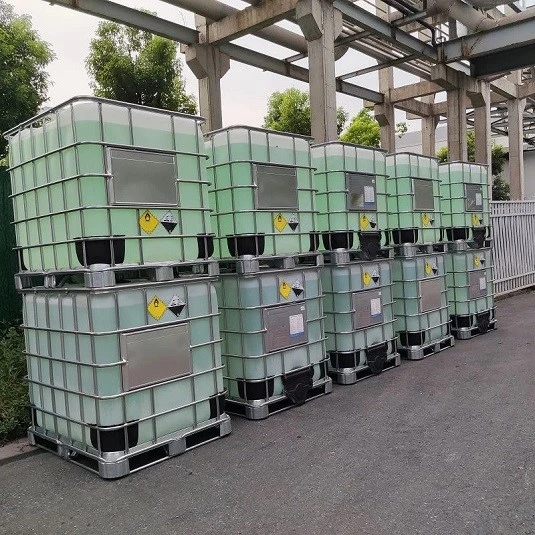
Hydrogen Peroxide 50% Solution (concentrated) is a colorless liquid with a slightly sharp odor. It is a strong oxidant, bleaching agent, and antiseptic. Exposure to heat or light will speed decomposition.

What are Advantages of 50% Industrial Grade Hydrogen Peroxide?
Industrial hydrogen peroxide is used for bleaching of chemical pulp, mechanical pulp, and recycled pulp (de-inking). The use of industrial hydrogen peroxide in pulp & paper bleaching increases brightness levels, improves brightness stability, and reduces manufacturing cost, as it is the only chemical that is mandatory.
Hydrogen peroxide is used in certain waste-water treatment processes to remove organic impurities. In leading oxidation processing, the Fenton reaction gives the immensely reactive hydroxyl radical (OH). This degrades organic compounds, including those that are ordinarily tough, such as aromatic or halogenated compounds. It can also oxidize sulfur-based compounds present in the waste; which is helpful as it generally reduces their odour.
Hydrogen peroxide can be used for the sterilization of various surfaces, including surgical tools, and may be deployed as a vapour for room sterilization. H2O2 demonstrates broad-spectrum efficacy against viruses, bacteria, yeasts, and bacterial spores.
In this field, it has found its use as an oxidizing agent. H2O2 has a low molecular weight; it is thus a more efficient oxidizing agent than potassium permanganate or dichromate. It is solvable in several organic solvents including water and the substrate itself
In this field, it finds its use as an oxidizing and a cleaning agent. The production process of printed circuits boards uses Hydrogen Peroxide as an etchant. The manufacturing process of semiconductors uses high-quality electronic grade hydrogen peroxide as an oxidizing and cleaning agent.
Hydrogen peroxide is environmentally and ecologically friendly; hence, it finds use in a variety of applications related to the environment. The process uses hydroxyl radicals to decompose toxic substances. Technological processes also use Hydrogen Peroxide to reduce their negative environmental impact. Soil remediation, when polluted with Hydro Carbons, is generally done using H2O2.
Application of 50% Industrial Grade Hydrogen Peroxide
1
2
3
4
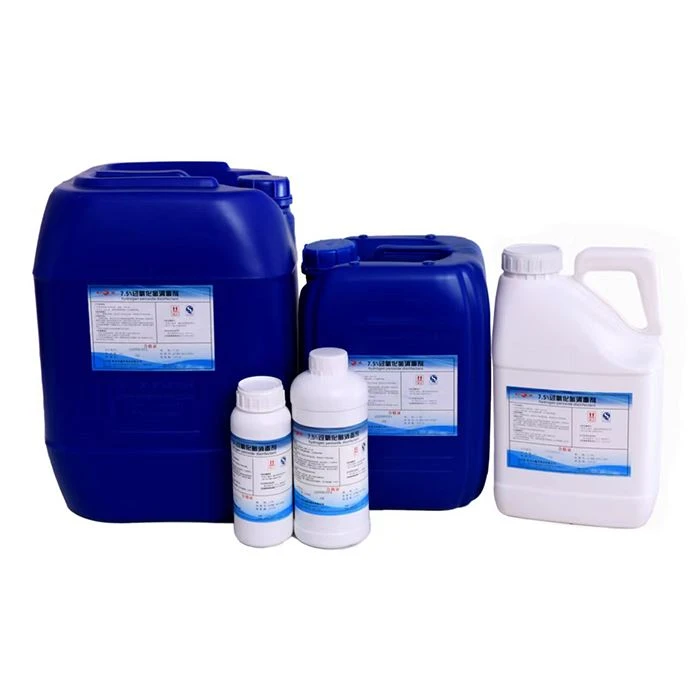
Hydrogen peroxide is the most basic peroxide and a reactive oxygen species with a single oxygen-oxygen bond. When exposed to light, it decomposes slowly, but fast when organic or reactive compounds are present. To block light, it is generally kept in a dark container with a stabiliser in a somewhat acidic solution. Hydrogen peroxide is found in all biological systems, including the human body. Peroxidases are enzymes that either consume or degrade hydrogen peroxide.


Food grade does not generally have stabilisers added to it. The stabilizers are present in non-food solutions to slow the decomposition of the peroxide into Oxygen and water. Some to these stabilizers are not the sort of thing you would want to consume, so they are absent from food grade peroxide.
Adopting high-performance integrated joints,the CRA series can increase the tempo by 25%,and the productivity can reach a new peak;the vibration suppression algorithm is upgraded to achieve a good anti-shaking effect;the full-parameter DH compensation algorithm and TrueMotion algorithm are supported,and the absolute positioning accuracy is 0.2 ~ 0.4 mm under the change of attitude movement,and the curved motion is precise and stable.


Discription of 50% Industrial Grade Hydrogen Peroxide:
Hydrogen peroxide, chemical formula H2O2. Pure hydrogen peroxide is a light blue viscous liquid that can be miscible with water in any proportion. It is a strong oxidant. The aqueous solution is commonly known as hydrogen peroxide and is a colorless transparent liquid. Its aqueous solution is suitable for medical wound disinfection, environmental disinfection and food disinfection. Under normal circumstances, it will slowly decompose into water and oxygen, but the decomposition rate is extremely slow. The way to speed up its reaction rate is to add a catalyst-manganese dioxide, etc. or irradiate with short wave rays.
Specification of 50% Industrial Grade Hydrogen Peroxide:
|
|
27.5%grade |
30%grade |
35%grade |
50%grade |
|
H2O2 concentration%(m/m) |
27.5 |
30.0 |
35.0 |
50.0 |
|
Free ACID as H2SO4(m/m)% |
0.04 |
0.04 |
0.04 |
0.04 |
|
|
0.08 |
0.08 |
0.08 |
0.08 |
|
|
97.0 |
97.0 |
97.0 |
97.0 |
|
|
0.03 |
0.025 |
0.025 |
0.035 |
|
Nitrate(as No3)(m/m)% |
0.02 |
0.020 |
0.02 |
0.025 |

Our company actively advocates the enterprise spirit of "unity, practicability and innovation" and the enterprise vision of "customer satisfaction, enterprise prosperity, employee happiness". After ten years of development, the company has become an very important supplier of hydrogen peroxide solution in China, and provides high-quality hydrogen peroxide solution products to global customers.


Q: How do you store 50% hydrogen peroxide?
Q: What is the shelf life of 50% hydrogen peroxide?
Under aerobic aquatic metabolism conditions, hydrogen peroxide degrades with half- lives of 1.1-5.3 hours in non-sterile conditions, and ca. 80 hours in sterile conditions.
Q: How do you dilute 50% hydrogen peroxide?
Q: Is 50% hydrogen peroxide corrosive?
Q: What is the density of 50% hydrogen peroxide?
Q: Is 50% hydrogen peroxide safe?
Q: What is 40% hydrogen peroxide used for?
Hydrogen peroxide does kill germs, including most viruses and bacteria. A concentration of 3% hydrogen peroxide is an effective disinfectant typically found in stores. Hydrogen peroxide can damage some surfaces, and is a more dangerous chemical than some disinfectants, so be cautious when handling it.
الوسم : 50% industrial grade hydrogen peroxide h₂o₂ for paper bleaching, China, manufacturers, suppliers, factory, wholesale, buy, الصف الصناعي 50 ٪ H2O2 سوق, طلب H2O2 الصناعي 50 ٪, سوق H2O2 الصناعي 50 ٪, حل H2O2 50 ٪ الطلب الصناعي, السوق بنسبة 50 ٪ من الدرجة الصناعية H2O2, 50 ٪ من الدرجة الصناعية H2O2


